design + development + delivery
Business websites & custom web apps
Move your business forward
Start with a free website audit.
full-stack web developer
Ιοαnnis Καperdαs
I design and build high-performance websites and web apps. From strategy to launch.
selected work: My latest projects
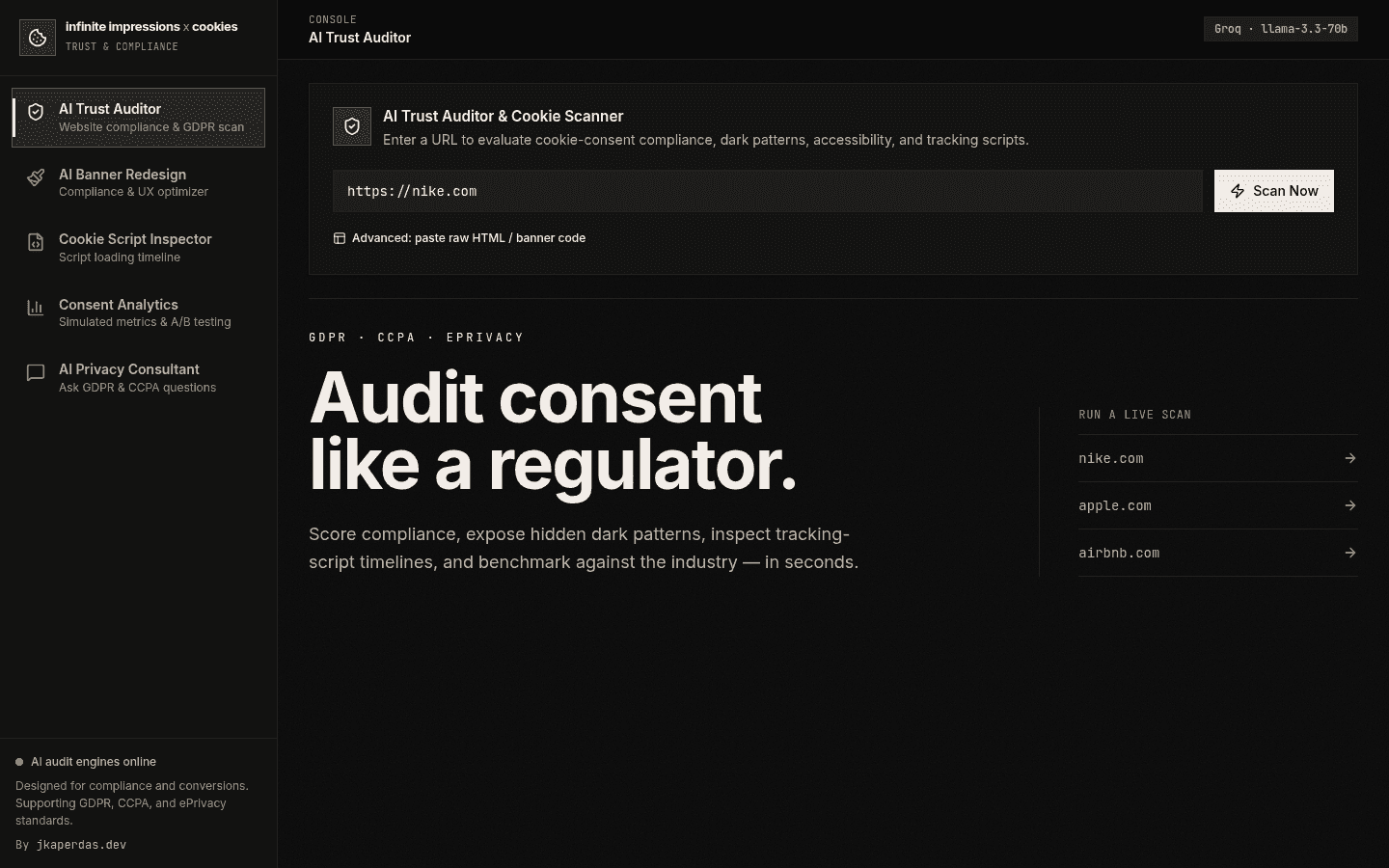
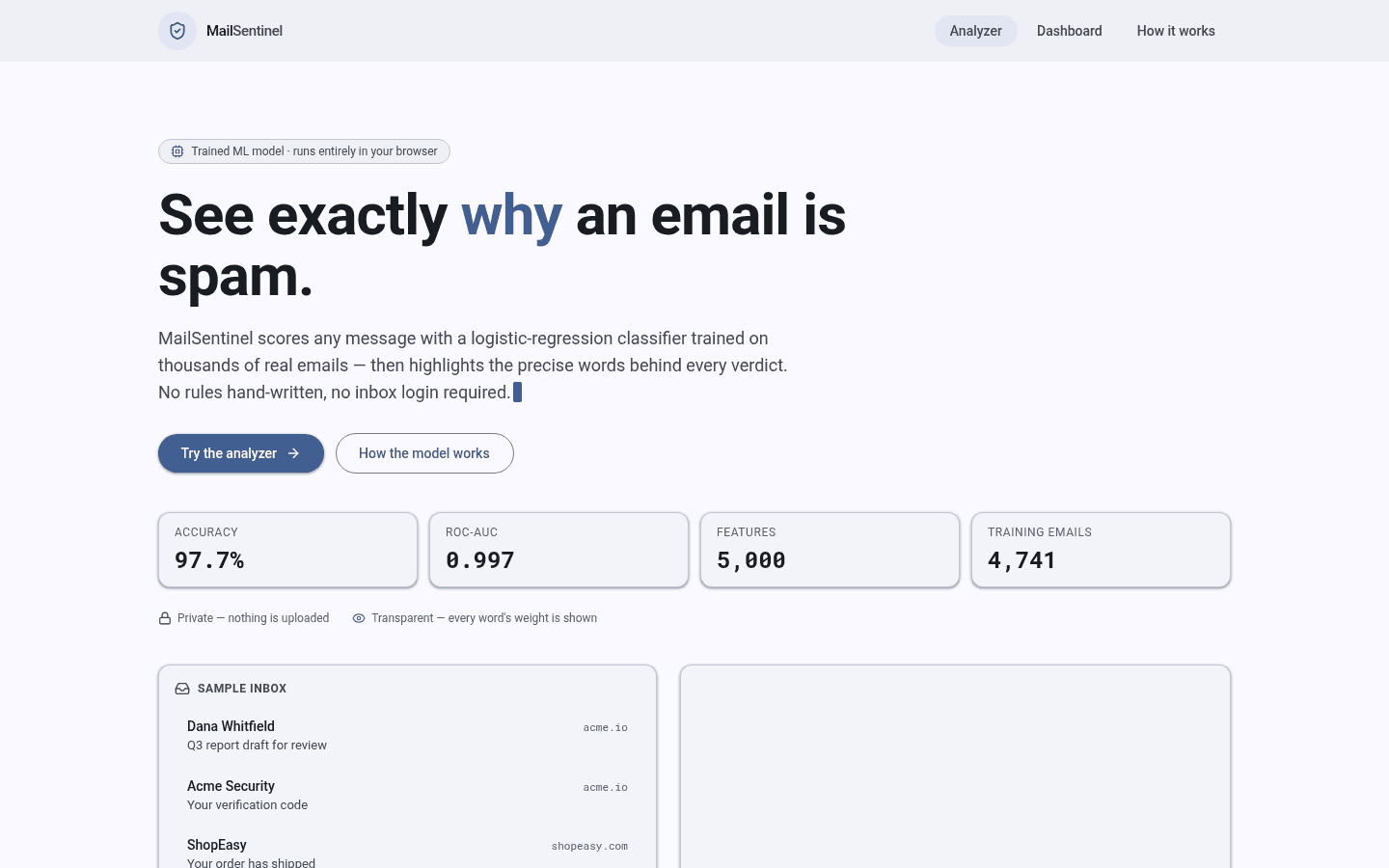
A working web app, a public archive and two technical products: what I built and how each works.

Recurring office ordering · 2026
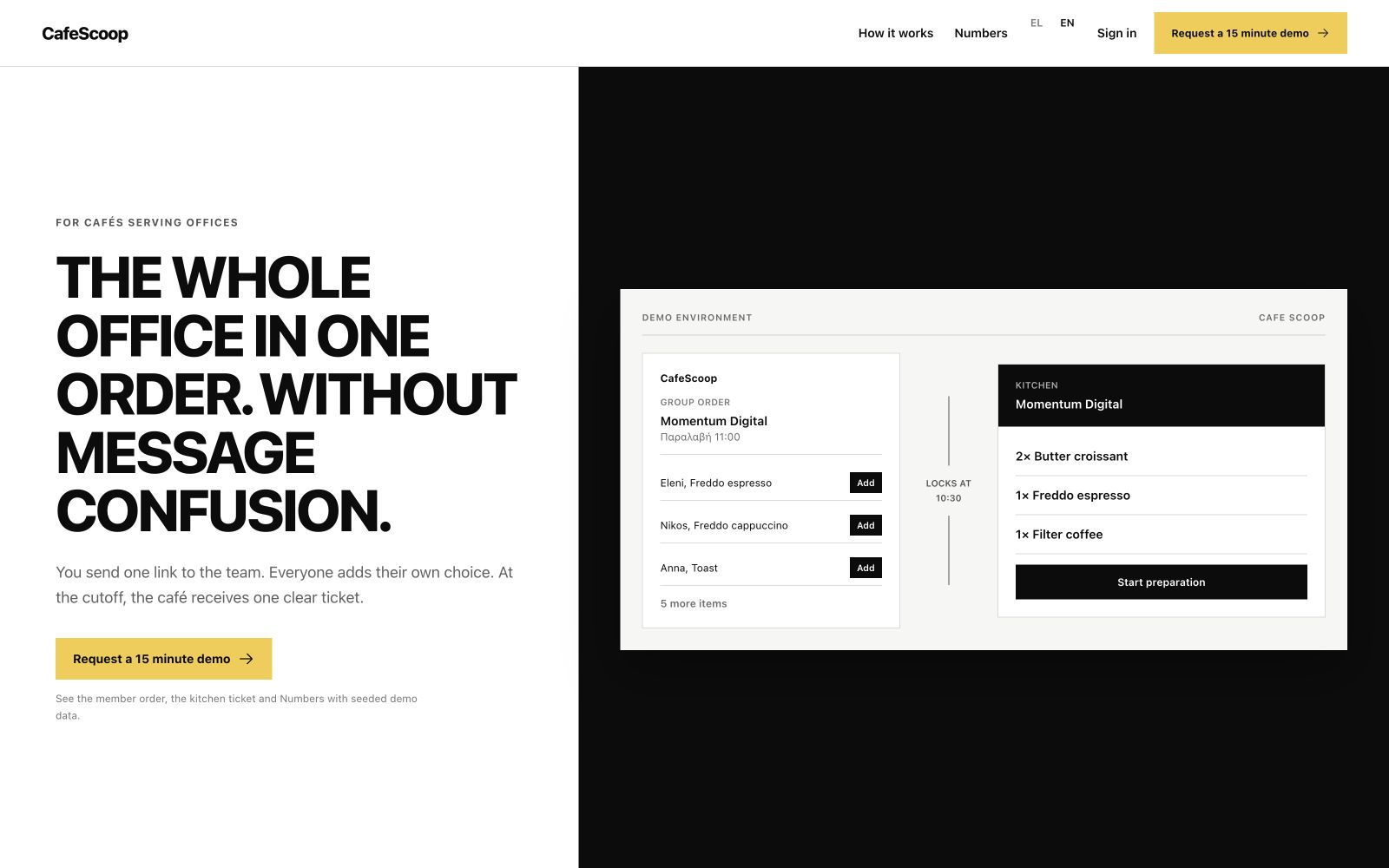
CafeScoop
result
A direct ordering path for nearby offices: each group gets a fast link-to-order flow and the café receives one clear ticket instead of message chaos.
1 link → 1 café ticket
project details
- problem
- Neighborhood cafés lose repeat office business to fragmented phone and WhatsApp orders: the same details are collected every day, cutoffs are unclear, and staff must manually combine each person's choices into one order.
- built
- A bilingual recurring-order platform in Next.js 15, TypeScript and Supabase. One organizer creates the group and schedule, teammates join from a link without required signup, the live order locks automatically, and the café receives one aggregated ticket. Kitchen workflow, email notifications, revenue reporting and Sentry complete the operating loop.
- Next.js 15
- TypeScript
- Supabase
- Realtime
- EL / EN
Have a website or app in mind?
Tell me about ittools & software
design · development · delivery
code: Recent Code Initiatives
Patterns I reach for on real work. Each one solves a problem you'll recognise. Pick one to read it.
Modal.tsx
Modal dialogs that trap focus and restore it, without pulling in a UI library.
// Problem: accessible modal dialogs that trap focus and restore it on close,
// without pulling in a whole UI library.
import { useEffect, useRef } from "react";

export function Modal({ open, onClose, title, children }: {
  open: boolean;
  onClose: () => void;
  title: string;
  children: React.ReactNode;
}) {
  const ref = useRef<HTMLDivElement>(null);

  useEffect(() => {
    if (!open) return;
    const previouslyFocused = document.activeElement as HTMLElement | null;
    const focusables = ref.current!.querySelectorAll<HTMLElement>(
      'a[href], button:not([disabled]), input, [tabindex]:not([tabindex="-1"])',
    );
    focusables[0]?.focus();

    function onKeyDown(e: KeyboardEvent) {
      if (e.key === "Escape") return onClose();
      if (e.key !== "Tab" || focusables.length === 0) return;
      const first = focusables[0];
      const last = focusables[focusables.length - 1];
      // Wrap focus so Tab never escapes the dialog.
      if (e.shiftKey && document.activeElement === first) {
        e.preventDefault();
        last.focus();
      } else if (!e.shiftKey && document.activeElement === last) {
        e.preventDefault();
        first.focus();
      }
    }

    document.addEventListener("keydown", onKeyDown);
    return () => {
      document.removeEventListener("keydown", onKeyDown);
      previouslyFocused?.focus(); // restore focus to the trigger element
    };
  }, [open, onClose]);

  if (!open) return null;
  return (
    <div className="overlay" onClick={onClose}>
      <div
        ref={ref}
        role="dialog"
        aria-modal="true"
        aria-label={title}
        onClick={(e) => e.stopPropagation()}
      >
        {children}
      </div>
    </div>
  );
}about: Full-stack execution
I'm Ioannis Kaperdas, a full-stack web developer with hands-on experience delivering websites and web applications across a range of projects. I hold an MSc in Business Information Technology Systems from the University of Strathclyde and an MSc in IT and Applications from the University of West Attica.
I care about the things that make software actually good: fast load times, accessible markup, typed and maintainable code, and clear communication along the way.
Tools are means to an end. I pick the right ones for the job and keep the codebase something the next person can live with.
what I do
- Web apps & dashboards
- /Marketing & landing sites
- /Performance & SEO
- /Design to code
- based in
- Athens, Greece · Remote worldwide
- stack
- TypeScript · React · Next.js
- working with
- Startups, agencies & founders
// toolkit
- TypeScript
- React
- Next.js
- Node.js
- Tailwind CSS
- PostgreSQL
- REST & GraphQL
- Figma → Code
- Web Vitals
- Vercel / CI
contact: Let's work together
Have something in mind, or just want to chat? Tell me about it and I'll reply within a day.